



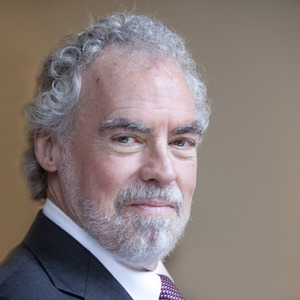
Prof. Edgar Allan Lind, Jr.
My main areas of research interest include:
The Social Psychology of Justice
I construct theory and conduct research on what people view as fair in their everyday lives. Much of my work has focused on judgments of procedural justice and on the causes and consequences of feeling unfairly treated. This area of research has revealed that feelings of fair treatment prompt greater cooperation and greater acceptance of social authority, and that feelings of unfair treatment prompt competition and even vendettas against social authority.
My book with Tom Tyler, The Social Psychology of Procedural Fairness (1988), included a review of empirical work on the psychology of fair process in social, organizational, and political contexts at that time. It sets forth the first “relational justice” theory of fairness. The “group-value theory” presented in that book offered a new explanation of why fairness matters to people. The theory described how people sometimes are willing to forgo personal gain when they are treated in ways that assure them of their security and status within a social group. Later empirical work has supported the theory’s predictions about when people would act in cooperative, prosocial ways. Group-value theory is the foundation of later theories of the social psychology of fairness (e.g., Fairness Heuristic theory by Lind and Van den Bos, the Group Engagement Model by Tyler and Blader, and the Uncertainty Management Model by Van den Bos and Lind). These theoretical works suggest that fairness judgments are a psychological tool that people use to decide whether to make sacrifices for, and identify with, social relationships and social institutions.
This work provides some important clues to how people's attitudes and actions are more strongly affected by social-interest than by self-interest.
Leadership
I study the social psychology of leadership, especially the social and individual identity dynamics of organization and influence in groups. Sim Sitkin and I have developed a model of leadership actions and follower responses--the Six Domains of Leadership--that provides a useful way of organizing and using work on the psychology of leadership.
Law and Law-Related Behavior
I conduct research on decisions to sue and on reactions to legal authority. My most recent work looks at how the incorporation of "fair process" elements in the development, promulgation, and execution of government regulations promotes citizen compliance and satisfaction.
Honors and Awards
- Lifetime Achievement Award, International Society for Justice Research.
- 2000 Kalven Prize for “paradigm-shifting scholarship” in law and social issues, awarded by the Law and Society Association.
- 2002 Owens Scholarly Achievement Award for best publication in a refereed journal, Society for Organizational and Industrial Psychology
- 1998 Academy of Management Best Paper Award, Organizational Behavior Division
- 1997 Klineberg Prize for best paper on intercultural and intergroup relations. Society for the Psychological Study of Social Issues.
Primary Interests:
- Applied Social Psychology
- Culture and Ethnicity
- Group Processes
- Interpersonal Processes
- Law and Public Policy
- Organizational Behavior
- Self and Identity
Note from the Network: The holder of this profile has certified having all necessary rights, licenses, and authorization to post the files listed below. Visitors are welcome to copy or use any files for noncommercial or journalistic purposes provided they credit the profile holder and cite this page as the source.
Image Gallery
Books:
- Lind, E. A. (1995). Social conflict and social justice: Some lessons from the social psychology of justice. Leiden, The Netherlands: Leiden University Press.
- Lind, E. A. (Ed.) (2020). Social psychology and justice. New York: Routledge.
- Lind, E. A., and Sitkin, S. (2015). The six domains of leadership. Columbia, SC: Learning with Leaders.
- Lind, E. A., and Tyler, T. R. (1988). The social psychology of procedural justice. New York: Springer. https://doi.org/10.1007/978-1-4899-2115-4.
Journal Articles:
- Huo, Y. J., Smith, H., Tyler, T. R., & Lind, E. A. (1996). Superordinate identification, subgroup identification, and justice concerns: Is separatism the problem; is assimilation the answer? Psychological Science, 7, 40-45.
- Lind, E. A. (2023). Focusing on the “social” in social justice research. Social Justice Research, 36, 337-351.
- Lind, E. A. (1975). The exercise of information influence in legal advocacy. Journal of Applied Social Psychology, 5, 127-143.
- Lind, E. A., & Earley, P. E. (1992). Procedural justice and culture. International Journal of Psychology, 27, 227-242.
- Lind, E. A., Huo, Y. J., & Tyler, T. R. (1994). ...And justice for all: Ethnicity, gender, and preferences for dispute resolution procedures. Law and Human Behavior, 18, 269-290.
- Lind, E. A., Kanfer, R., & Earley, P. C. (1990). Voice, control, and procedural justice: Instrumental and noninstrumental concerns in fairness judgments. Journal of Personality and Social Psychology, 59, 952-959.
- Lind, E. A., Kray, L., and Thompson, L. (1998). The social construction of injustice: Fairness judgments in response to own and others’ unfair treatment by authorities. Organizational Behavior and Human Decision Processes, 75, 1-22.
- Lind, E. A., Kulik, C., Ambrose, M., & Park, M. (1993). Individual and corporate dispute resolution: Using procedural fairness as a decision heuristic. Administrative Science Quarterly, 38, 224-251.
- Lind, E.A., & Arndt, C. (2018). Creating trusted regulatory policy. The Regulatory Review, 2018-01-18
- Tyler, T. R., & Lind, E. A. (1990). Intrinsic versus community-based justice models: When does group membership matter? Journal of Social Issues, 46, 83-94.
- Walker, L., LaTour, S., Lind, E. A., and Thibaut, J. (1974). Reactions of participants and observers to modes of adjudication. Journal of Applied Social Psychology, 4, 295-310.
Other Publications:
- Lind, E. A. (2001). Fairness heuristic theory: Justice judgments as pivotal cognitions in organizational relations. In J. Greenberg and R. Cropanzano (Eds.), Advances in organizational justice (pp. 56-88). Palo Alto, CA: Stanford University Press.
- Lind, E. A. (2020). The study of justice in social psychology and related fields. In E. Lind (Ed.) Social psychology and Justice, pp. 1-20. New York: Routledge.
- Lind, E. A. (2020). Exclusion, exploitation, and the psychology of justice. In E. Lind (Ed.) Social psychology and Justice, pp. 75-92. New York: Routledge.
- Lind, E.A. & Arndt, C. (2017). Regulations, Fairness, and Trust. In Trust and Public Policy: How Better Governance Can Help Rebuild Public Trust. OECD Public Governance Reviews, OECD Publishing, Paris.
- Lind, E.A., & Arndt, C. (2016). Perceived Fairness and Regulatory Policy: A Behavioural Science Perspective on Government-Citizen Interactions. OECD Regulatory Policy Working Papers, No. 6, OECD Publishing, Paris.
- Van den Bos, K., & Lind, E. A. (2002). Uncertainty management by means of fairness judgments. In M. P. Zanna (Ed.), Advances in experimental social psychology (Vol. 34, pp. 1-60). San Diego, CA: Academic Press.
- Van den Bos, K., & Lind, E. A. (2013) On Sense-Making Reactions and Public Inhibition of Benign Social Motives: An Appraisal Model of Prosocial Behavior. In J. Olson and M. Zanna (Eds.), Advances in experimental social psychology, Vol. 48. 1-58. San Diego, CA: Academic Press.
Courses Taught:
- Introductory Psychology
- Introductory Social Psychology
- Judgment and Decision Making
- Leadership
- Psychology and Law
- Psychology of Social Justice
- Research Methods in I-O Psychology
- Research Methods in Social Psychology
- Social Psychology
- Social Psychology of Groups
- Social Science and Law
Prof. Edgar Allan Lind, Jr.
Fuqua School of Business
Duke University
100 Fuqua Drive
Durham, North Carolina 27708
United States of America
- Work: (919) 660-7849
- Mobile: 919-724-1130
